An initial ergonomic risk assessment is the first step in a systematic process to identify and evaluate potential ergonomic hazards in the workplace. The main goal is to quickly screen for risks that could lead to musculoskeletal disorders (MSDs), such as sprains, strains, or other injuries, and determine if a more in-depth assessment is needed.
Our Story
Consult with Our Ergonomic Expertise and Care
Enhance workplace well-being and productivity with our comprehensive ergonomic services. We offer ergonomic consultations to identify and solve potential issues, customized training programs to empower your team with best practices, and bespoke safety training to build a culture of health and safety. Our services are designed to reduce risk, prevent injuries, and create a more comfortable, efficient work environment for everyone.
Related Sector
Manufacturing
Estate Plant
Construction
Healthcare
Hospitality
Logistic
Aerospace
Office
Agriculture
Engineering
Mining
Services
Objective Initial Ergonomic Risk Assessment
Key Characteristics of an Objective Initial Assessment
Measurable and Verifiable Data: The assessment is based on observable and quantifiable information, such as measuring force, counting repetitions, and analyzing postures using specific tools.
Standardized Tools: It utilizes recognized and validated methods to evaluate risk factors. These tools provide a consistent way to score or rate the risk, regardless of who is performing the assessment.
Focus on Risk Factors: The assessment focuses on identifying and evaluating the specific ergonomic risk factors present in a job or task, such as:
Forceful exertions: How much force is required to lift, push, or pull.
Awkward postures: The positions the body is in while working.
Repetitive motions: The frequency of a movement.
Vibration and contact stress.
Methods and Tools Used
While a comprehensive, advanced assessment might use more complex tools, an objective initial assessment typically uses straightforward methods for a quick screening. These can include:
Walkthrough Surveys: A trained person observes the workplace, tasks, and work environment. They look for obvious hazards like heavy lifting, poor postures, or fast-paced, repetitive movements.
Checklists: Cornell Musculoskeletal Questionnaire (CMQ) and DOSH Initial ERA Checklist are used to document the presence or absence of specific risk factors. They often result in a simple “yes” or “no” for each potential hazard.
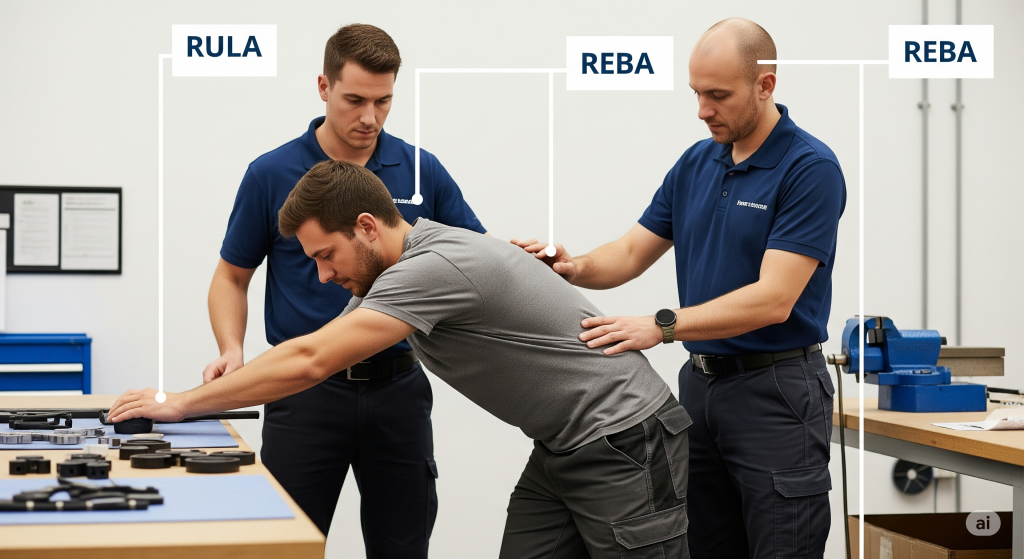
Screening Tools: These are semi-quantitative tools that use a systematic process to evaluate the body’s posture and movement. Examples include the Rapid Upper Limb Assessment (RULA) or the Rapid Entire Body Assessment (REBA), which assign scores based on body angles and other factors to determine a risk level.
Ergonomic Consultancy
Assessmet Tools
RULA/REBA
Rapid Upper Limb Assessment and Rapid Entire Body Assessment
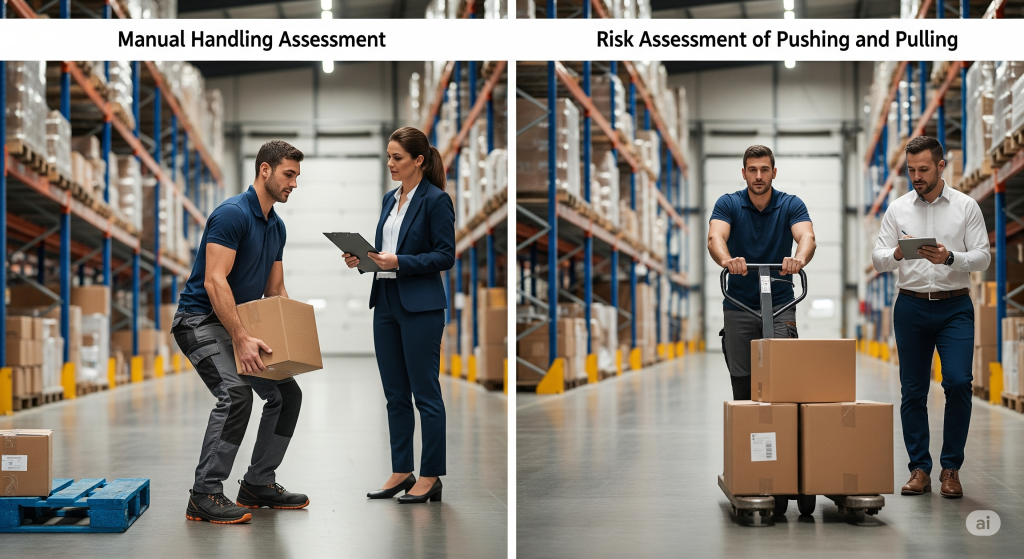
MAC/RAPP
Manual Handling Assessment Charts and Risk Assessment of Pushing and Pulling
ART
Assessment of Repetitive Tasks
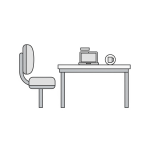
ROSA
Rapid Office Strain Assessment
Ready to transform your ergonomic space?
Contact us today to schedule a consultation or to learn more about our services.